AI Fraud Apps Appear on the App Store: Fake Screenshots Claim 4.9-Star Ratings, Developer Slams Apple’s Review Process as Ineffective.
Safari extension developer Jeff Johnson says the Apple App Store contains apps using suspected AI-generated screenshots to fake high ratings. He cited TabControl, a paid Safari extension that ranked highly in the U.S. Mac App Store, whose promotional screenshot displayed a purported “4.9 out of 5” rating that did not match the app’s actual rating, raising concerns about Apple’s review process and potential privacy risks.
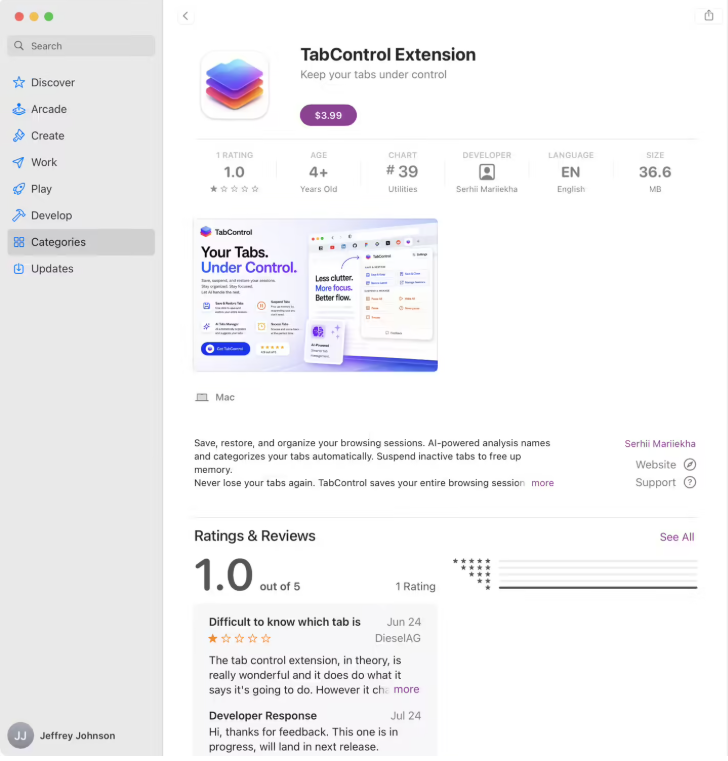
Concerns about deceptive listings on Apple’s App Store are back in focus after Safari extension developer Jeff Johnson said the platform is allowing obviously misleading app marketing to slip through review. In a post published on August 13, Johnson argued that some apps are using fabricated screenshots and manufactured social proof to persuade users to download them.
He pointed to the paid Safari extension rankings on the U.S. Mac App Store as an example. According to Johnson, an extension called TabControl had climbed to No. 12 on the chart, despite promotional images that appeared highly questionable. The screenshots were described as looking AI-generated and prominently displayed a bold “4.9 out of 5” rating, a presentation he viewed as plainly suspicious rather than credible.
In Johnson’s view, this kind of listing is designed to create the appearance of strong user approval before a customer even checks the app’s real page data. By embedding praise and ratings directly into promotional images, developers can shape first impressions in ways that may not reflect reality at all.
Criticism of Apple’s review process
Johnson said the use of fake ratings inside screenshots has become a familiar tactic among scam-style App Store listings. What makes the issue more striking, he argued, is that some of these promotional materials are not merely misleading in subtle ways, but so implausible that they should be easy to flag during review.
His broader criticism is that Apple’s screening process appears too narrowly focused. Reviewing app functionality and code compliance is important, but he argued that it is no longer enough. Screenshots, marketing claims, and other metadata shown on a product page can be just as central to how users are deceived, and should be treated as part of the review process rather than as secondary material.
Without that wider scrutiny, an app may technically satisfy store requirements while still using dishonest presentation to drive installs and purchases. In that scenario, the listing itself becomes part of the scam, even if the app passes formal checks elsewhere.
Why browser extensions raise the stakes
The case has drawn extra attention because the app in question is a Safari extension rather than a typical entertainment or utility app. Browser extensions can, in principle, interact with webpage content, browsing activity, and related system-level permissions. That makes the trust issue more serious.
Johnson warned that if an extension reaches users through deceptive tactics, the damage may extend beyond manipulated ratings or misleading sales tactics. Once installed, such software could pose broader privacy concerns, especially given the kind of access browser extensions may request or receive.
For that reason, he suggested that users should be particularly wary of extensions that appear to rely on fabricated marketing from the outset. If a developer is willing to mislead people in the product listing, there is little reason to assume the software itself deserves trust.
AI is making fraudulent storefront content easier to produce
The episode also highlights a larger and persistent problem for app marketplaces: platform governance is becoming harder as AI-generated content grows more sophisticated and easier to create. Producing polished-looking screenshots, fake review-style visuals, and persuasive promotional imagery now requires far less effort than before.
That shift raises pressure on platforms like Apple, which has long presented strict review as one of the App Store’s defining strengths. If AI-generated promotional materials that appear deceptive can still pass through the system, that promise of rigorous oversight inevitably comes under greater scrutiny.
For users, the most practical response for now may be caution. Promotional screenshots should not be taken at face value, especially when they seem overly polished, strangely worded, or loaded with self-declared ratings and praise. For Apple, however, the larger question is whether screenshot and metadata review will become a real enforcement priority. The answer may determine how effectively this kind of App Store fraud can be contained in the future.