Altman invites Washington inside the AI industry
Sam Altman used a Financial Times op-ed to argue for a U.S.-led body with authority to set AI safety standards and determine access to the most advanced models. Separate reporting also said OpenAI discussed giving the U.S. government a 5% stake and having leading labs contribute to a dividend fund.
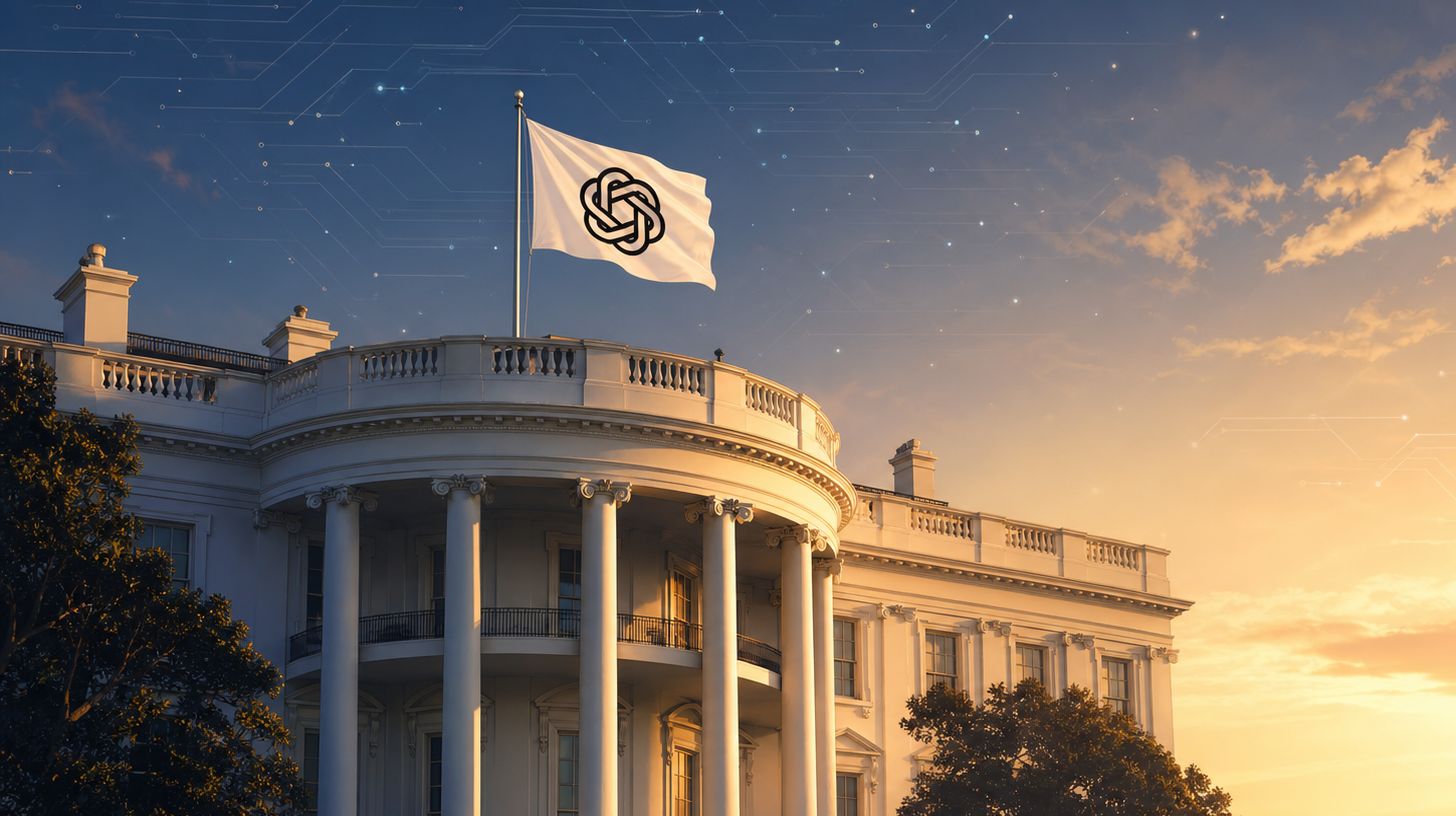
Sam Altman is urging Washington to play a far more direct role in overseeing advanced artificial intelligence, arguing that decisions about the technology’s limits and use should be made by democratic institutions rather than left primarily to private companies.
In an opinion piece published by the Financial Times, the OpenAI chief called for a U.S.-led body with genuine authority to shape AI safety rules and determine access to the most capable systems. His argument reflects a broader push to establish public oversight at a time when AI is advancing quickly and the political stakes around the technology are rising.
A call for formal AI governance
Altman’s proposal reportedly emerged from discussions held during the G7 summit in France in June, where AI executives met with government leaders to talk about how the technology should be regulated. Those conversations appear to have reinforced his view that the next phase of AI development requires stronger institutional involvement.
Rather than relying on voluntary standards set by leading labs, Altman suggested creating a structure in which public authorities have a meaningful role in setting boundaries. The envisioned forum would not merely offer advice; it would carry enough weight to influence safety standards and decide who is allowed to use the most advanced models.
“Democratic institutions must not cede their responsibilities to AI labs,” Altman said, adding that “citizens and their elected representatives must make the rules.”
To explain what such a system could look like, he pointed to earlier examples of international oversight. Among the models cited were the International Atomic Energy Agency during the Cold War, as well as long-established regulatory frameworks in sectors such as aviation and banking. The comparison suggests an approach in which AI, like other high-impact technologies and industries, would be subject to structured external supervision rather than internal self-policing alone.
Parallel reports about government participation
The push for a stronger state role comes alongside separate Financial Times reporting that OpenAI had also discussed the possibility of giving the U.S. government a 5% stake in the company. While the report did not present this as a finalized plan, the idea points to a wider conversation about how the public might be involved not only in regulating AI, but also in sharing in its economic value.
That discussion reportedly extended beyond equity. According to the report, other American AI labs were also encouraged to consider contributing to a dividend fund designed to redistribute wealth. The concept adds another layer to the growing debate around who benefits financially from AI and how those gains should be allocated.
What was reportedly proposed
A U.S.-led AI safety forum with meaningful authority rather than a purely symbolic role.
Regulatory power over advanced systems, including the ability to help define safety standards and control access to the most powerful models.
A possible 5% government stake in OpenAI, according to separate reporting.
A dividend fund concept that could involve contributions from other U.S. AI companies to distribute a portion of AI-driven wealth.
Why this debate is gaining urgency
The significance of these ideas lies in how quickly the AI policy conversation is evolving. Questions that once seemed theoretical—who should regulate frontier AI, who should be allowed to use it, and who should benefit from the wealth it creates—are now becoming immediate policy issues.
The article also notes that regulatory concerns have become even more prominent following the recent Mythos saga, which has intensified attention on the risks and governance challenges surrounding powerful AI systems.
At the same time, the economic dimension remains unresolved. One of the central questions, highlighted through arguments associated with former White House AI advisor Dean W. Ball, is whether AI-generated wealth should flow directly to households or be routed through government systems. That distinction matters, because public promises of redistribution do not necessarily guarantee that benefits will reach people in the form originally envisioned.
Taken together, the proposals suggest a broader shift in thinking: AI may no longer be treated simply as a fast-moving private-sector innovation story. Instead, it is increasingly being framed as a matter of public governance, democratic accountability, and national policy—one in which the state may seek both regulatory authority and a more direct claim on the value the technology creates.