AI Audio Reconstruction from Spectrograms Forces NTSB to Restrict Public Docket Access
The National Transportation Safety Board temporarily suspended public access to its investigation docket after users leveraged AI to reconstruct cockpit voice recordings from publicly released spectrogram images, highlighting emerging challenges in data transparency and AI audio synthesis.
AI Reconstructs Cockpit Audio, Prompting NTSB Policy Shift
The National Transportation Safety Board (NTSB) recently took the unprecedented step of temporarily restricting public access to its accident investigation docket. The decision came after internet users successfully employed artificial intelligence to reconstruct cockpit voice recordings from spectrogram images, raising immediate concerns about data privacy, aviation transparency, and the evolving capabilities of generative audio tools.
From Image to Audio: The Technical Breakthrough
By federal regulation, the NTSB is prohibited from publishing raw cockpit voice recorder (CVR) audio in its public docket. However, the agency routinely uploads spectrogram files—visual representations of sound frequencies—to provide investigators and the public with technical data. A spectrogram encodes audio waveforms into a two-dimensional image, mapping time, frequency, and amplitude.
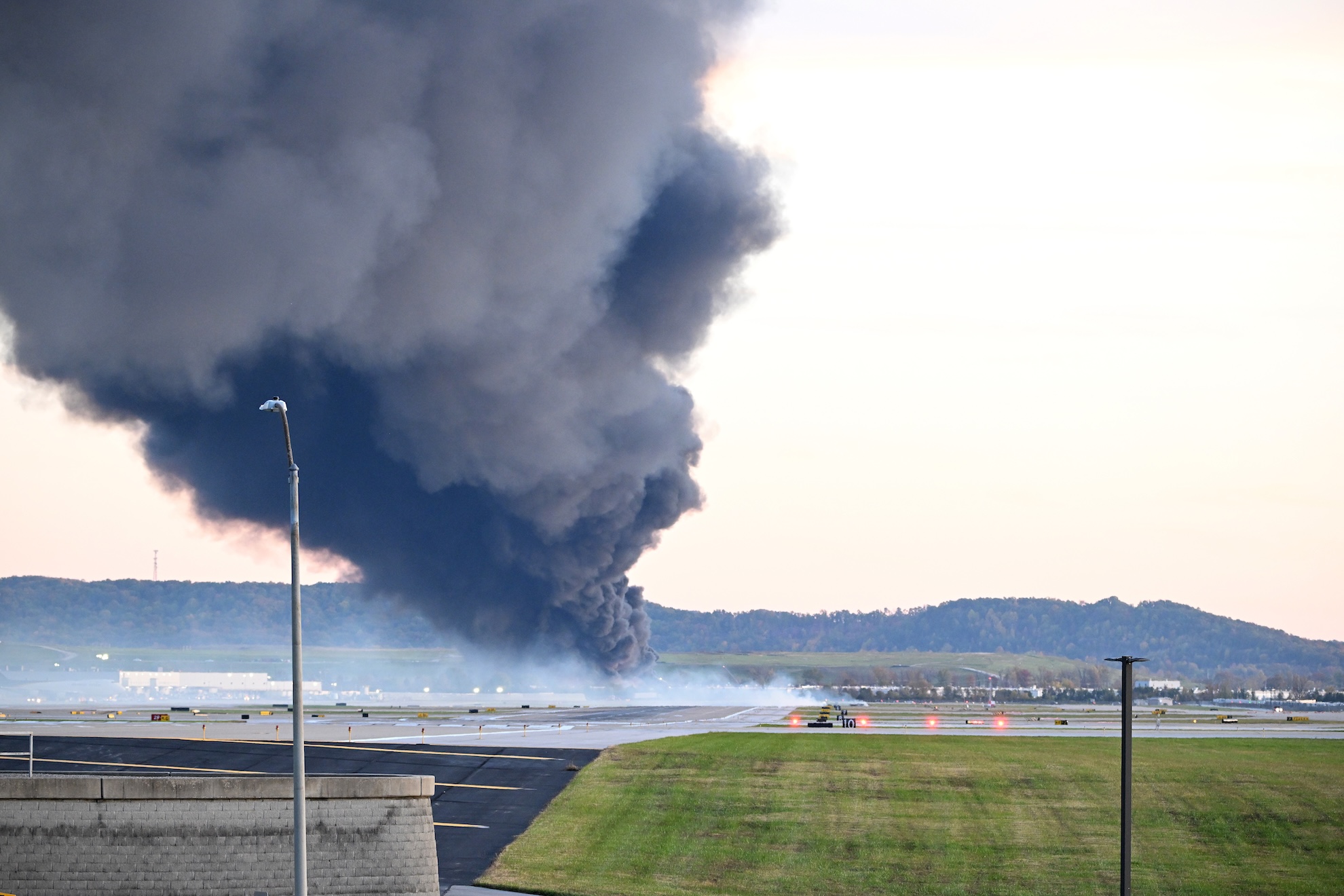
Science communicator and YouTuber Scott Manley recently highlighted that the mathematical data embedded within these high-resolution images could theoretically be reverse-engineered back into audible sound. Following this observation, online communities began experimenting with AI models and coding assistants to process the spectrogram data alongside publicly available flight transcripts. The result was a series of AI-generated approximations that closely mirrored the original cockpit audio from UPS Flight 2976, which crashed in Louisville, Kentucky.
Agency Response and System Restrictions
Upon discovering that reconstructed audio was circulating online, the NTSB temporarily disabled public access to its docket system to conduct an internal review. The agency has since restored access but has chosen to keep 42 active investigations, including the UPS Flight 2976 case, closed to the public pending further evaluation. This move underscores a growing tension between the NTSB’s mandate for transparency and the unforeseen consequences of AI-driven data reconstruction.
The Broader Implications for AI and Public Data
This incident marks a significant milestone in how AI interacts with publicly available technical documents. What was once considered a safe, anonymized data format has proven vulnerable to modern machine learning techniques capable of cross-referencing visual data with linguistic models. As AI audio synthesis and reverse-engineering tools become more accessible, regulatory bodies and tech platforms will likely face increased pressure to establish new guidelines for data publication, digital forensics, and the ethical boundaries of AI-assisted reconstruction.