Unitree's cheapest humanoid goes global
Chinese robotics firm Unitree has launched its lowest-cost humanoid robot, the R1, on AliExpress with U.S. pricing starting at $6,800. The four-foot robot is now available across North America, Europe, Japan, and Singapore, marking a major step toward consumer-accessible humanoids.
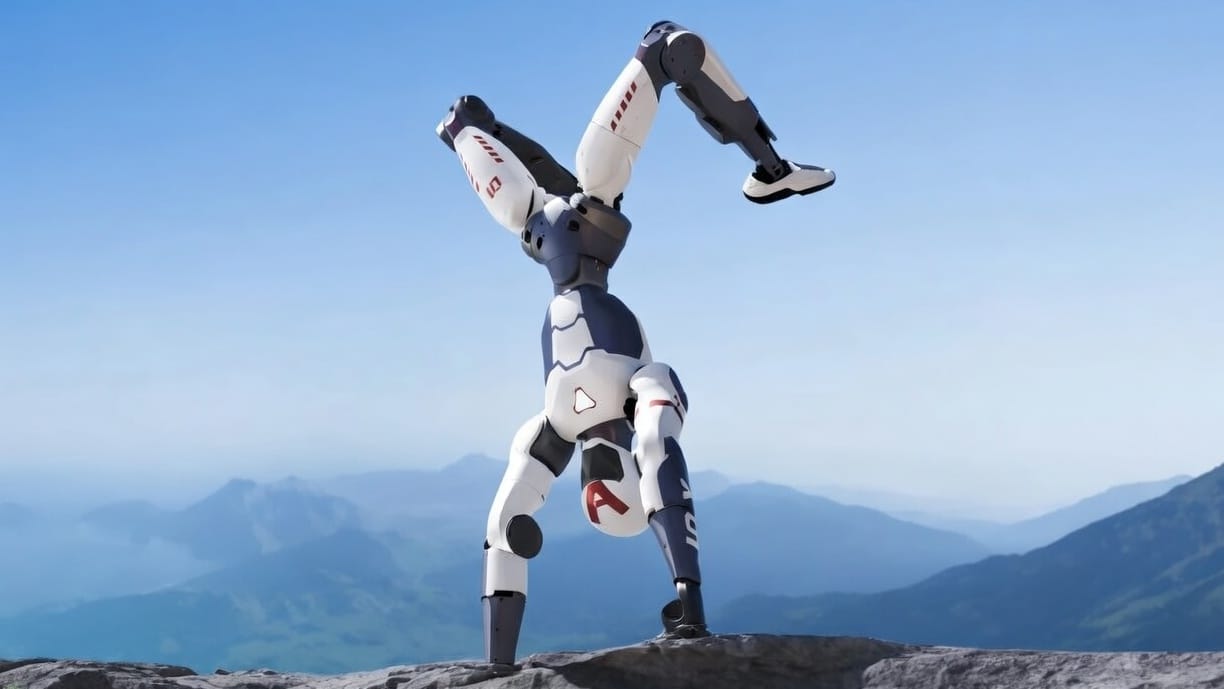
Chinese robotics company Unitree has expanded the international availability of its most affordable humanoid robot, bringing the R1 to customers outside China for the first time. By listing the robot on Alibaba’s AliExpress platform, the company is moving beyond domestic sales and opening orders to buyers across North America, Europe, Japan, and Singapore.
While several high-profile robotics firms continue to discuss long-term visions for humanoid machines, Unitree is taking a more immediate approach—placing a commercially available product directly in the hands of global customers.
Now Available Worldwide Through AliExpress
Unitree is distributing the R1 through AliExpress’s Brand+ channel, positioning the robot as an accessible platform for developers, educators, research institutions, and advanced hobbyists. In China, the R1 lineup is priced at roughly $5,000. For U.S. customers, the entry-level R1 Air—featuring 20 degrees of freedom—starts at $6,800.
Initial deliveries are expected to begin around June 30, signaling that this is not a distant pre-order concept but a near-term commercial rollout. Availability spans major global markets, including North America, Europe, Japan, and Singapore.
A Compact Humanoid Designed for Dynamic Movement
Standing about four feet tall and weighing approximately 60 pounds, the R1 is engineered with mobility in mind. Unitree describes the robot as “born for sport,” emphasizing its focus on agility and full-body coordination rather than static demonstration.
The robot showcases a range of dynamic capabilities, including:
Running downhill with balance control
Recovering autonomously after falls
Executing acrobatic maneuvers such as cartwheels
These features highlight the R1’s emphasis on motion and recovery, areas that remain technically challenging in humanoid robotics. Instead of serving solely as a stationary research unit, the R1 is built to demonstrate coordinated, whole-body movement in real-world conditions.
Production Expansion and IPO Ambitions
The international launch aligns with Unitree’s broader growth strategy. The company is reportedly increasing production capacity and considering an initial public offering. Industry analysts project that by 2026, Unitree could account for nearly half of China’s humanoid robot shipments—a reflection of its aggressive manufacturing and commercialization plans.
By scaling output while simultaneously entering overseas markets, Unitree appears intent on establishing itself as a dominant player in the emerging humanoid robotics sector.
A New Price Benchmark for Humanoids
With a starting price of $6,800 in the United States, the R1 sets a new reference point for affordability in the humanoid category. Although international buyers pay more than customers in China, the pricing still places the robot within reach for university laboratories, research teams, and well-funded independent developers.
In an industry where many widely publicized humanoid projects remain in prototype phases or limited pilot programs, Unitree is offering a commercially available alternative. Rather than presenting a roadmap, the company is delivering a product that customers can order now—potentially reshaping expectations around accessibility and deployment in the humanoid robotics market.