SpaceX Targets $1.78 Trillion IPO Valuation as AI Business Projects 100x Growth
Goldman Sachs projects SpaceX’s upcoming IPO could value the aerospace giant at $1.78 trillion, driven primarily by its AI division. Financial models forecast AI revenues surging from $3.2 billion in 2025 to $322 billion by 2030, significantly outpacing traditional satellite and launch operations.
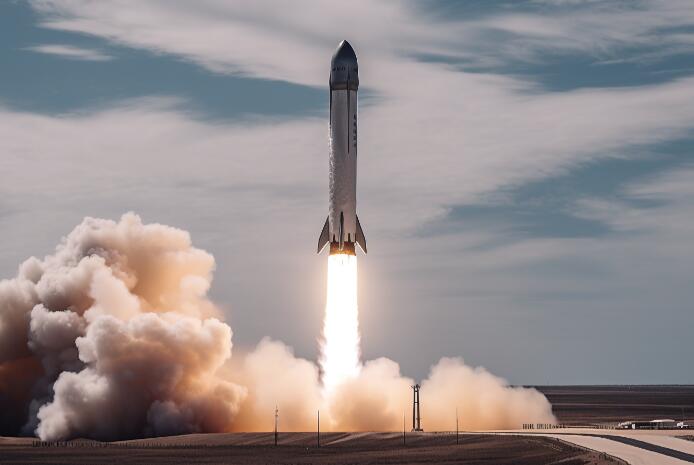
SpaceX Targets $1.78 Trillion IPO Valuation Driven by AI Expansion
As SpaceX officially launches its IPO roadshow, market attention has rapidly shifted to the company's staggering valuation expectations. According to financial models presented by lead underwriter Goldman Sachs to institutional investors, the aerospace and technology giant could achieve a public market valuation of up to $1.78 trillion. Notably, this ambitious target is not anchored in traditional rocket launches or satellite internet, but rather in the explosive projected growth of its artificial intelligence division.
Financial Projections: AI Revenue Expected to Surge 100x
Goldman Sachs forecasts a dramatic financial trajectory for SpaceX over the next five years. The firm projects that AI-related revenues will skyrocket from $3.2 billion in 2025 to $322 billion by 2030, representing a nearly 100-fold increase. Concurrently, SpaceX's total revenue is expected to jump from $18.7 billion in 2024 to $474 billion in 2030. Profitability metrics follow a similar upward curve, with adjusted EBITDA projected to grow from $6.6 billion to $352 billion over the same period. The company's free cash flow, which stood at a negative $13.8 billion last year, is anticipated to turn positive, reaching $72 billion by 2031.
AI Market Potential Outpaces Traditional Aerospace
Prospectus disclosures indicate that SpaceX's long-term growth strategy is heavily weighted toward artificial intelligence. The company's AI subsidiary, xAI, is assigned a potential total addressable market (TAM) of $26.5 trillion. This dwarfs the combined $2 trillion market opportunity for Starlink satellite internet and aerospace launch services. Near-term projections show AI revenue growing 388% year-over-year in 2026 to reach $15.6 billion, followed by $34.5 billion in 2027. By contrast, traditional business segments are forecasted to generate $144 billion from Starlink and $8.3 billion from rocket launches by 2030, both falling significantly short of the AI division's expected contribution.
Commercialization Hurdles and Fierce Competition
Despite the optimistic financial modeling, SpaceX's AI ambitions face substantial real-world challenges. To meet these revenue targets, xAI's Grok large language model must secure a dominant position in highly competitive sectors, including code generation, cybersecurity, AI agents, and general conversational AI. The division must contend with established industry leaders such as OpenAI, Google, and Anthropic. Furthermore, xAI has experienced significant internal turbulence, including the departure of all ten original co-founders within two years under Elon Musk's leadership. Commercialization progress has also lagged behind expectations. The Colossus 1 supercomputing data center in Memphis, Tennessee, equipped with 300 megawatts of power, has reportedly operated below capacity due to insufficient internal demand for Grok, at times leasing compute resources to competitor Anthropic.
Goldman Sachs Leads Landmark Tech IPO
Goldman Sachs secured the lead underwriting mandate after outcompeting major financial institutions including Morgan Stanley, JPMorgan, Citigroup, Bank of America, and UBS. With a maximum fundraising target of $86 billion, the offering is poised to generate tens of millions in underwriting fees. Industry analysts view this AI-centric mega-IPO as a critical bellwether for how capital markets will price the long-term value and scalability of artificial intelligence infrastructure in the coming decade.