Vercel CEO Guillermo Rauch on the fight to split off models from agents
Vercel CEO Guillermo Rauch says AI development has shifted from prototyping to production, where companies are prioritizing security, auditability, and price-performance. In an interview with TechCrunch, he argued that models and agents should remain decoupled, with open protocols and modular infrastructure winning out over closed ecosystems.
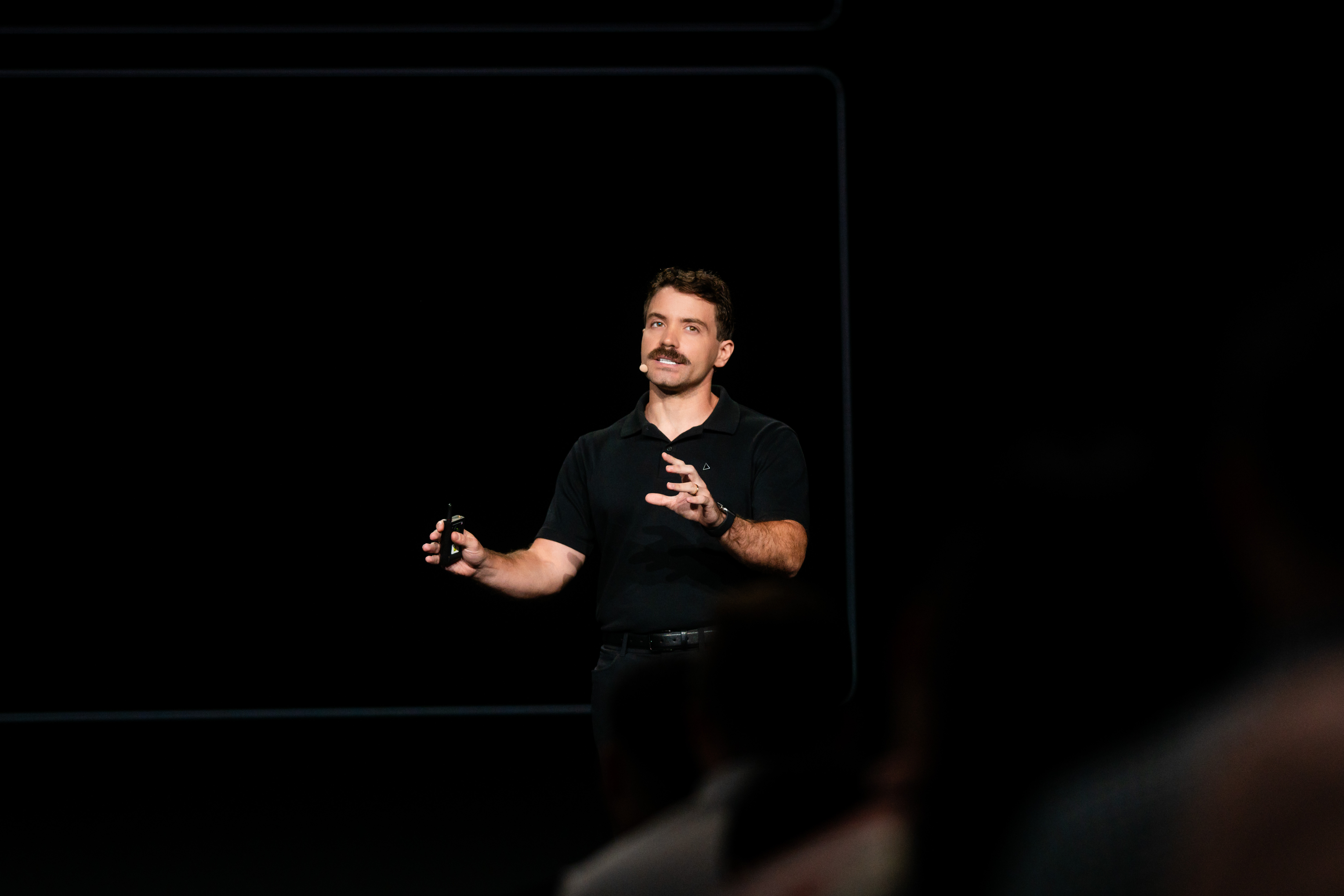
Vercel, best known for the cloud platform developers use to launch software without dealing with server management, has also become a major force in AI infrastructure. The company now handles around 6 million deployments every day, with roughly half initiated by coding agents. At the same time, more than 1 trillion tokens move through Vercel’s AI gateway daily.
Following the company’s recent ShipNYC event, Vercel CEO Guillermo Rauch shared his view of where AI is heading, what companies have learned as agents move beyond experimentation, and why he believes the industry is approaching a key decision about whether models and agents should remain separate.
AI is moving from experimentation to real-world deployment
According to Rauch, the tone of the market has changed significantly over the past year. In the earlier phase, the emphasis was on rapid experimentation: teams were excited to build agents, test ideas, and see what was possible. Inside Vercel, that translated into hundreds of internally created agents being deployed organically across the company.
But once those systems began operating in production environments, the focus shifted. The question was no longer simply what agents could do, but how to make them reliable, secure, and genuinely useful at scale.
From that experience, Rauch said two standout use cases have emerged.
Coding agents, which are driving a large share of token usage across the industry.
Internal business agents, which help employees do their jobs more effectively inside the company.
Coding agents may generate enormous amounts of software, but that also increases demand for the infrastructure needed to deploy and run what they produce. Internal agents, meanwhile, create a different set of challenges: secure access to data, visibility into what the agent is doing, and clear audit trails showing tool usage and permissions.
Why Vercel built Eve and Sandbox
To address those operational concerns, Vercel developed two products aimed at making agents easier to manage in practical settings.
The first is Eve, a framework that allows users to define an agent’s instructions and capabilities using natural language. The second is Vercel Sandbox, which is designed to limit what an agent can access and control what information can leave its environment.
Rauch described Sandbox as a way to give agents room to operate without allowing them unrestricted freedom. The goal is to preserve their usefulness while still enforcing policies around data access and data exfiltration.
Sandboxing is about preventing costly data mistakes
For Rauch, one of the clearest reasons sandboxing matters is the risk that sensitive information could unintentionally be exposed through AI tools.
He pointed to coding environments such as Devin or Cursor as examples of where that risk can appear. In the wrong configuration, he said, a tool might end up training on an organization’s entire codebase. For companies with highly specialized and valuable intellectual property, that is a serious concern.
He recalled discussing this issue with the president of Airbus, using the example of decades of aerospace engineering code written in C++. In that scenario, a single poorly chosen developer tool could send highly valuable internal code to the cloud for training. The broader point is that AI adoption creates new convenience, but also new exposure, especially when organizations do not have tight control over where their data goes.
What internal agents actually do inside a company
While coding agents are now widely understood, Rauch argued that internal business agents may be just as important.
He gave the example of a sales representative at Vercel whose role is to grow existing customer accounts. The real bottleneck in that kind of work, he said, is often not judgment or relationship-building ability, but access to usable data.
A sales rep might want to ask a straightforward question such as which five accounts added the most seats in the last two weeks so she can prioritize outreach. In many companies, that kind of answer is not instantly available. Instead, employees are forced to wait for dashboards, reporting projects, or engineering work inside systems like Salesforce.
Rauch said Vercel itself dealt with that frustration for years. The company moved quickly in research and development, but was far slower on the operational side because business systems were harder to access and adapt. In his telling, agents can help close that gap by allowing people across the organization to interact with data more directly.
He also said the same underlying technology can be applied to both external products and internal productivity tools. In that sense, the distinction between customer-facing agents and internal assistants becomes less important than the APIs and systems that make both possible.
Agents may force companies to open up their data systems
One of Rauch’s broader arguments is that agents are pushing companies toward more open architectures. If an AI system needs to work across tools, retrieve information, and take action, then the data and services it depends on cannot remain locked away in isolated SaaS environments.
That shift, he suggested, could have long-term consequences for software vendors whose business models depend on keeping customer data trapped inside their platforms. In a world increasingly shaped by agents, closed systems become a disadvantage.
Rauch’s view is that agent-driven software rewards interoperability, not data silos.
Companies are becoming less dependent on a single AI lab
Rauch also sees a major change in how businesses relate to the big AI model providers. Last year, many companies were still selecting a single preferred lab, planning to build primarily on OpenAI or Anthropic. That approach is becoming less common.
Now, he said, customers better understand the stack: model, harness, data platform, sandbox, gateway. Once those layers are seen as modular, companies are more willing to mix and match providers according to their needs.
That means teams may use OpenAI for one workload, Anthropic for another, Gemini where cost and performance look better, and open models where flexibility matters most.
Rauch noted that Gemini is seeing significant growth, even if it does not always dominate headlines, because production environments force buyers to optimize for price and performance rather than buzz alone. He also said open models are gaining traction, specifically naming DeepSeek and GLM-5.2 as examples of that momentum.
As labs expand, they increasingly overlap with infrastructure companies
The relationship between infrastructure platforms and AI labs is not purely cooperative. In some areas, they are becoming direct competitors.
One recent example is OpenAI’s introduction of tools that can publish directly to the web without requiring users to leave the OpenAI environment. That kind of feature naturally moves the labs closer to territory traditionally occupied by platform companies like Vercel.
Rauch acknowledged that this overlap is real, but he framed it as both a challenge and an opportunity. If users begin thinking of ChatGPT as a place to create websites, that may also lead them to ask follow-up questions about hosting, where Vercel becomes part of the conversation. Still, he was clear that as model providers add more platform capabilities, competition with existing infrastructure vendors becomes unavoidable.
The bigger battle is whether models and agents stay separate
For Rauch, the deeper issue is not just competitive product releases. It is whether the next generation of AI software will be built around tightly integrated systems or around modular components that can be combined more freely.
In one version of the future, the model and the agent are bundled together, and users get most of their intelligence and execution from a single provider. In the other, companies choose building blocks from different vendors and assemble systems the way they have traditionally built software.
Rauch is clearly advocating for the second model. He sees Vercel’s role as providing the infrastructure layer for that open ecosystem, much as AWS became foundational for an earlier era of computing. In his view, that means fighting for open protocols and resisting a future where too much of the stack is controlled by a handful of labs.
As AI moves from demos to production systems, that question may become one of the most important in the industry: will agents remain portable, composable, and connected to open infrastructure, or will they be absorbed into closed model platforms?
Vercel is betting the answer should look a lot more like software engineering than vendor lock-in.