Baichuan AI Unveils Baichuan-M4 Medical LLM, Slashes Factual Hallucination Rate to 3.3%
Baichuan AI has introduced Baichuan-M4, a specialized medical large language model that claims to reduce factual hallucinations to just 3.3% using a novel reinforcement learning algorithm. Alongside the model, the company launched Baixiaoyi, an AI family doctor integrated into WeChat, aiming to shift AI healthcare from passive consultation to proactive, long-term health management.
Breaking the Hallucination Barrier in Medical AI
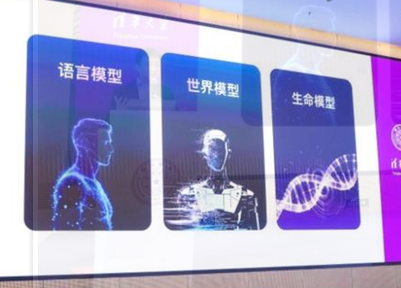
At the New Paradigm of AI Healthcare academic forum hosted at Tsinghua University, Baichuan AI founder and CEO Wang Xiaochuan officially unveiled Baichuan-M4, the company's next-generation medical large language model. Alongside the core model, Baichuan introduced Baixiaoyi, an AI family doctor designed to bridge the gap between advanced AI capabilities and everyday patient access. The launch marks a significant step forward in addressing one of the most persistent challenges in clinical AI: factual hallucination.
Technical Breakthroughs and Benchmark Dominance
Factual hallucinations, often described as AI confabulation, have long hindered the safe deployment of large language models in clinical settings. To tackle this, Baichuan AI developed a proprietary Factual Perception Reinforcement Learning Algorithm. According to company data, this approach successfully reduced the base model's factual hallucination rate to just 3.3%.
This technical optimization has translated into top-tier performance across industry standards. Baichuan-M4 currently ranks first globally on three authoritative medical benchmarks: HealthBench, HealthBench Hard, and HealthBench Professional. In these evaluations, the model reportedly outperforms several leading flagship models, including GPT-5.5, Opus 4.7, and DeepSeek-V4-Pro, demonstrating superior evidence-based reasoning and diagnostic accuracy.
Clinical Validation and Real-World Integration
Recognizing that laboratory metrics must translate to clinical utility, Baichuan AI has already initiated joint clinical research with three of China's top-tier medical institutions: Beijing Children's Hospital, the Cancer Hospital of the Chinese Academy of Medical Sciences, and Ruijin Hospital affiliated with Shanghai Jiao Tong University School of Medicine. These partnerships aim to validate the model's performance in real-world diagnostic workflows and refine its safety protocols.
From Passive Q&A to Proactive Health Management
Beyond raw model performance, Baichuan AI is focusing heavily on product architecture and user accessibility. CEO Wang Xiaochuan emphasized that while the brain solves capability problems, the body solves reach. To this end, the company launched Baixiaoyi, an AI family doctor deeply integrated into the WeChat ecosystem.
Users can add Baixiaoyi via Enterprise WeChat and invite it into family group chats. Once integrated, the AI automatically creates independent health profiles for each family member. Unlike traditional medical chatbots that wait for prompts, Baixiaoyi operates proactively. It continuously analyzes daily conversations to structure health data, track medication histories, and flag high-risk health signals. The system can also autonomously send reminders for follow-up appointments and medication adherence.
Redefining the AI Healthcare Paradigm
The release of Baichuan-M4 and Baixiaoyi reflects a broader industry shift from experimental AI consultation to refined operational management. By combining a highly accurate, low-hallucination medical LLM with a high-frequency social touchpoint, Baichuan AI is attempting to close the loop that has long plagued digital health startups. The company envisions a four-tier healthcare network that connects households, primary care clinics, and national medical centers, ultimately democratizing access to high-quality medical guidance through AI-driven continuous care.