OpenAI Claims Breakthrough Solution to 80-Year-Old Math Problem
OpenAI announces its reasoning model has solved a famous unsolved geometry conjecture from 1946, with backing from mathematicians who previously criticized the company's premature claims about AI mathematical capabilities.
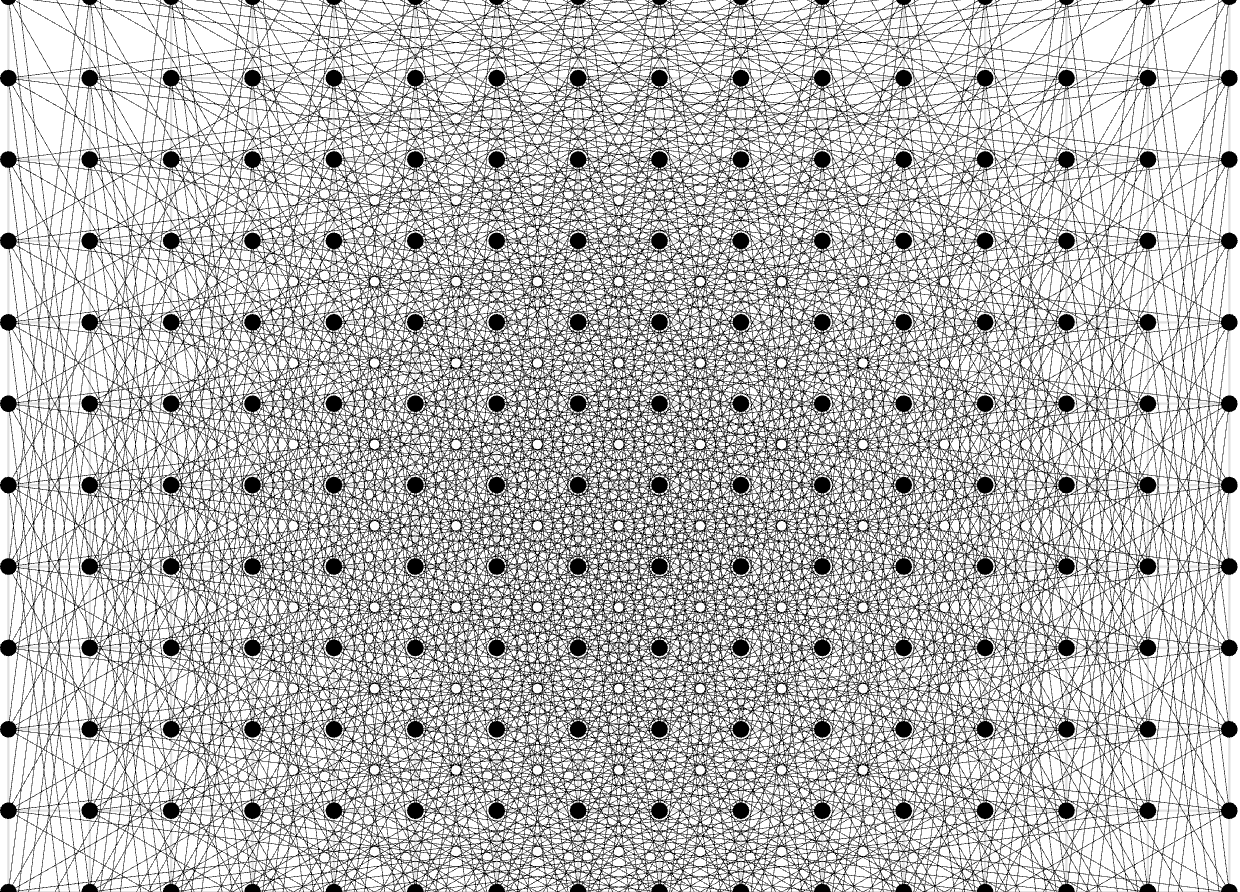
OpenAI has announced what it claims is a significant breakthrough in mathematics, stating that its new reasoning model has produced an original proof that disproves a famous unsolved conjecture in geometry originally posed by Paul Erdős in 1946.
The development comes after a previous embarrassing incident seven months ago when OpenAI's former VP Kevin Weil claimed that GPT-5 had solved multiple Erdős problems. That claim was later debunked when it became clear that the AI had merely rediscovered existing solutions rather than producing original work.
This time, OpenAI appears to have stronger support for its claims. The company published companion remarks from respected mathematicians including Noga Alon, Melanie Wood, and Thomas Bloom, who maintains the Erdos Problems website. Notably, Bloom had previously criticized OpenAI's earlier mathematical claims as "a dramatic misrepresentation."
"For nearly 80 years, mathematicians believed the best possible solutions looked roughly like square grids," OpenAI posted on X. "An OpenAI model has now disproved that belief, discovering an entirely new family of constructions that performs better."
The significance of this achievement, according to OpenAI, lies in the nature of the AI system used. Rather than employing a specialized mathematical solver, the proof came from a new general-purpose reasoning model. The company describes this as "the first time AI has autonomously solved a prominent open problem central to a field of mathematics."
This milestone suggests that AI systems are developing more sophisticated capabilities for handling complex, multi-step reasoning tasks that require sustained logical thinking across extended periods of analysis.