Le PDG d’ASML Christophe Fouquet sur le monopole de son entreprise : personne ne vient nous concurrencer
Le PDG d’ASML, Christophe Fouquet, affirme que la demande en puces pour l’IA dépassera l’offre pendant des années et rejette les affirmations selon lesquelles des concurrents pourraient facilement reproduire la technologie de lithographie EUV de l’entreprise. Il aborde également les contrôles à l’exportation, les préoccupations liées à la Chine et les raisons pour lesquelles l’avance technologique d’ASML est difficile à contester.
Chaque fois que vous utilisez l’IA, vous dépendez, d’une certaine manière, d’une entreprise néerlandaise de 42 ans comptant 44 000 employés, qui consacre 4,5 milliards d’euros par an à l’avancement de sa technologie.
ASML, dont le siège est aux Pays-Bas, fabrique les machines qui fabriquent les puces qui rendent l’IA possible. Plus précisément, elle fabrique les seules machines au monde capables d’imprimer les motifs microscopiques sur des plaquettes de silicium qui définissent les semi-conducteurs les plus avancés — un procédé appelé lithographie par ultraviolet extrême, ou EUV. Ces machines ont à peu près la taille d’un bus scolaire, nécessitent des mois d’assemblage, impliquent des centaines de fournisseurs et coûtent entre 200 millions et plus de 400 millions de dollars l’unité selon la génération.
Ce monopole a fait d’ASML l’entreprise la plus valorisée d’Europe, avec une capitalisation dépassant 530 milliards de dollars. Avec Microsoft, Meta, Amazon et Google qui s’engagent à dépenser plus de 600 milliards de dollars dans les infrastructures d’IA rien que cette année, la demande pour les machines d’ASML a explosé au point que l’entreprise a déclaré ouvertement que le monde manquera de puces pendant des années.
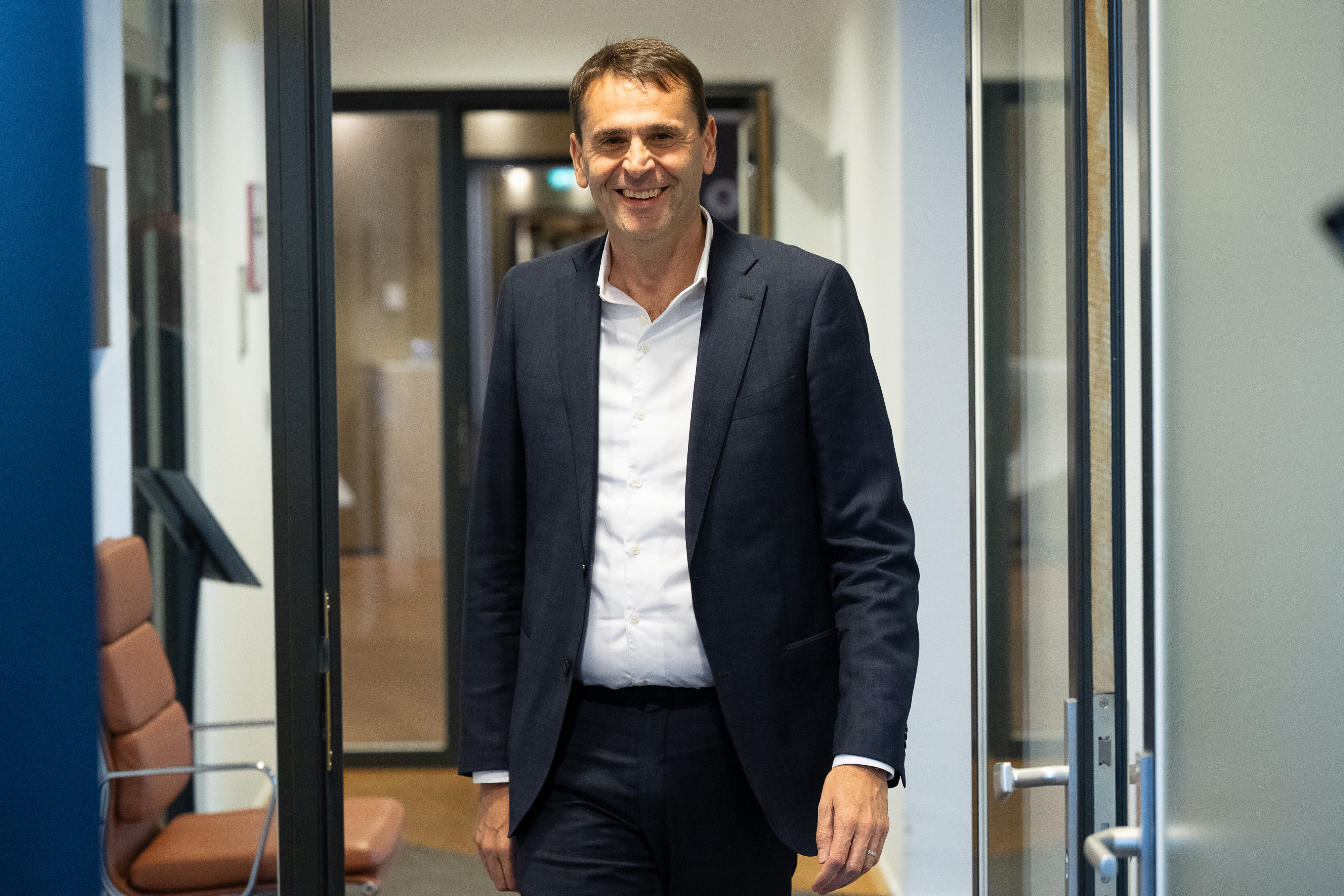
Christophe Fouquet, devenu PDG d’ASML en 2024 après plus d’une décennie au sein de l’entreprise, s’est exprimé sur l’essor de l’IA, la concurrence croissante, les contrôles à l’exportation et les raisons pour lesquelles il estime que personne n’est proche de reproduire la technologie d’ASML.
L’explosion de l’IA
Avez-vous vu venir l’explosion de l’IA ?
« Non, pas du tout », a déclaré Fouquet. « Nous avons travaillé très dur, mais sans imaginer que cela arriverait. »
Il a décrit le passage d’une IA perçue comme un concept lointain à la sortie de ChatGPT comme un tournant. « Aujourd’hui, je pense que nous considérons l’IA comme la prochaine révolution, non seulement industrielle mais aussi sociétale », a-t-il déclaré. « Être au cœur de tout cela chaque jour, parfois nous nous réveillons le matin et vérifions encore que ce qui se passe est bien réel. »
Contraintes d’approvisionnement et pénuries de puces
La chaîne d’approvisionnement peut-elle suivre le rythme de la demande ?
« La demande est telle que le marché dans son ensemble sera limité par l’offre pendant un certain temps », a déclaré Fouquet. Il a noté que le principal goulet d’étranglement semble actuellement se situer dans la fabrication des puces.
En tant que fournisseur d’équipements, ASML suit les plans d’expansion de ses clients. « Jusqu’à présent, nous les avons plutôt bien suivis — mais nous savons que nous devons renforcer toute notre chaîne d’approvisionnement et nos capacités », a-t-il déclaré. Les hyperscalers, a-t-il ajouté, s’attendent à ce que les pénuries persistent : « Pendant les deux, trois, voire cinq prochaines années, ils n’auront pas suffisamment de puces. »
Le coût du High-NA EUV
TSMC a déclaré que les dernières machines d’ASML sont trop chères. Comment réagissez-vous ?
Fouquet a soutenu que si les nouveaux systèmes EUV High-NA sont plus coûteux que les précédents systèmes EUV Low-NA, ils réduisent le coût global de production des puces. « Le coût de fabrication d’une plaquette avec cet outil sur certaines couches avancées sera inférieur. Nous pouvons obtenir une réduction des coûts de 20 % à 30 % », a-t-il déclaré.
Les machines EUV High-NA, dont le prix est de 350 millions de dollars ou plus, sont conçues pour une utilisation à long terme. « Nous avons conçu le High-NA pour les 10, 20 prochaines années », a-t-il indiqué, rappelant que des préoccupations similaires avaient été soulevées concernant les générations précédentes d’EUV avant leur adoption généralisée.
Revendications de concurrents et rétro-ingénierie
Une start-up de San Francisco appelée Substrate, fondée par un protégé de Peter Thiel, a levé plus de 100 millions de dollars et a été valorisée à plus d’un milliard de dollars en affirmant pouvoir construire une machine de lithographie concurrente.
Que pense-t-il de tels efforts ?
« Vouloir l’avoir et l’avoir réellement — il y a encore une énorme différence », a déclaré Fouquet. Il a souligné que la lithographie exige non seulement de produire une image, mais de le faire en grand volume, à faible coût, à grande vitesse et avec une précision nanométrique.
Le système EUV d’ASML repose sur des décennies de travaux antérieurs. « La seule raison pour laquelle ASML a pu construire une machine EUV, c’est que 80 % de celle-ci existait déjà », a-t-il expliqué. Résoudre le défi de la génération de la lumière EUV à lui seul a pris 20 ans. Bien qu’ASML ait produit sa première image EUV il y a 30 ans, il a fallu deux décennies supplémentaires pour en faire un système de production industrielle.
Concernant xLight, une start-up spécialisée dans les lasers, partiellement soutenue par le gouvernement américain et visant à travailler avec ASML, Fouquet a indiqué que l’entreprise se concentre sur l’amélioration de la source lumineuse des systèmes EUV. Bien que la source existante d’ASML puisse encore être améliorée, l’approche de xLight doit encore être construite et validée. « La seule question est de savoir si elle offre un avantage en termes de performance ou de coût par rapport à ce que nous avons », a-t-il déclaré. « Le verdict n’est pas encore rendu. »
Des rapports ont également suggéré que d’anciens ingénieurs d’ASML en Chine auraient procédé à une rétro-ingénierie de ses machines. Fouquet a rejeté cette affirmation. « Il n’y a aucune machine EUV en Chine — nous n’y avons jamais expédié d’outils », a-t-il déclaré, ajoutant qu’ASML suit tous les systèmes expédiés et qu’aucun ne manque à l’appel.
Étant donné que la technologie EUV n’a jamais été exportée vers la Chine, il a affirmé qu’il n’y a là-bas aucune personne formée aux systèmes EUV. ASML a également instauré une stricte séparation interne entre les employés pouvant accéder à la technologie EUV et ceux qui ne le peuvent pas. « Les faits indiquent très peu, voire aucun progrès », a-t-il déclaré.
Contrôles à l’exportation et écart générationnel
Concernant les contrôles à l’exportation, partagez-vous l’avis du PDG de Nvidia, Jensen Huang, selon lequel les entreprises devraient vendre à l’échelle mondiale tout en conservant leur meilleure technologie dans leur pays ?
« Je pense qu’il a tout à fait raison », a déclaré Fouquet. Il a évoqué la stratégie de Nvidia consistant à vendre des puces d’anciennes générations à l’étranger tout en conservant une avance avec ses produits les plus récents.
ASML adopte une approche similaire. L’entreprise expédie actuellement en Chine des équipements autorisés par les contrôles à l’exportation, mais fondés sur une technologie commercialisée pour la première fois en 2015. Fouquet a indiqué que Nvidia maintient un écart d’environ huit générations entre ses produits les plus avancés et ceux qu’elle vend plus largement, tandis que l’écart d’ASML est plus proche de deux ou trois générations.
Il a soutenu que les décideurs politiques doivent trouver un équilibre entre la restriction de l’accès et le maintien des opportunités commerciales. « Trouver le bon équilibre entre ne pas faire d’affaires du tout, perdre une opportunité majeure et encourager fortement d’autres à vous concurrencer » est essentiel, a-t-il déclaré.
« Personne ne vient pour nous »
Malgré les tensions géopolitiques croissantes et les ambitions des start-up, Fouquet s’est dit confiant quant à la position d’ASML.
« Les gens aiment disposer de la meilleure technologie, mais ils ont tendance à oublier ce qu’il a fallu pour la construire », a-t-il déclaré. Les systèmes d’ASML représentent des décennies de collaboration avec des fournisseurs et l’intégration de technologies complexes dans une plateforme industrielle.
« De nombreux groupes de personnes résolvant des problèmes très difficiles, puis une entreprise rassemblant le tout en s’appuyant sur des décennies d’expertise en lithographie pour en faire un système de production », a-t-il expliqué. « Ce n’est en aucun cas facile. Et je pense que c’est aussi notre meilleure protection. C’est tout simplement ce qu’il a fallu pour l’assembler. »