Tesla just increased its spending plan to $25B — here’s where the money is going
Tesla plans to increase its capital expenditures to $25 billion in 2026, roughly three times its historical annual spending. The company says the investment will fund AI, robotics, manufacturing expansion, and supply chain strengthening, but it expects negative free cash flow for the rest of the year as a result.
Tesla CEO Elon Musk opened the company’s first-quarter earnings call with a major financial update: Tesla plans to raise its capital expenditures to $25 billion in 2026, according to its first-quarter earnings report.
The figure represents spending on physical assets outside day-to-day operating expenses and is roughly three times higher than Tesla’s annual capex in recent years. For comparison, Tesla spent $8.5 billion in 2025, $11.3 billion in 2024, and $8.9 billion in 2023.
In January, Tesla had already projected capital expenditures in excess of $20 billion for 2026 to support AI initiatives, including compute infrastructure and data centers, as well as the expansion and ramp-up of manufacturing and R&D production lines. The new $25 billion target adds another $5 billion to that forecast, signaling higher-than-expected investment needs.
So far, quarterly capital expenditures remain in line with previous quarters at $2.5 billion.
Betting Big on AI and Robotics
Musk framed the increased spending as a strategic move to position Tesla for long-term growth.
“With 2026 we’re going to be substantially increasing our investments in the future,” Musk said on the earnings call. “So you should expect to see significant, a very significant increase in capital expenditures, but I think well justified for a substantially increased future revenue stream.”
The spending surge aligns with Musk’s ambition to evolve Tesla beyond electric vehicles, solar, and energy storage into an AI and robotics-focused company.
Planned investments include AI training, chip design, and “laying the groundwork” for expanded manufacturing production. Tesla will also direct funds toward its robotaxi operations and a new semiconductor research fab in Austin.
Optimus and Manufacturing Expansion
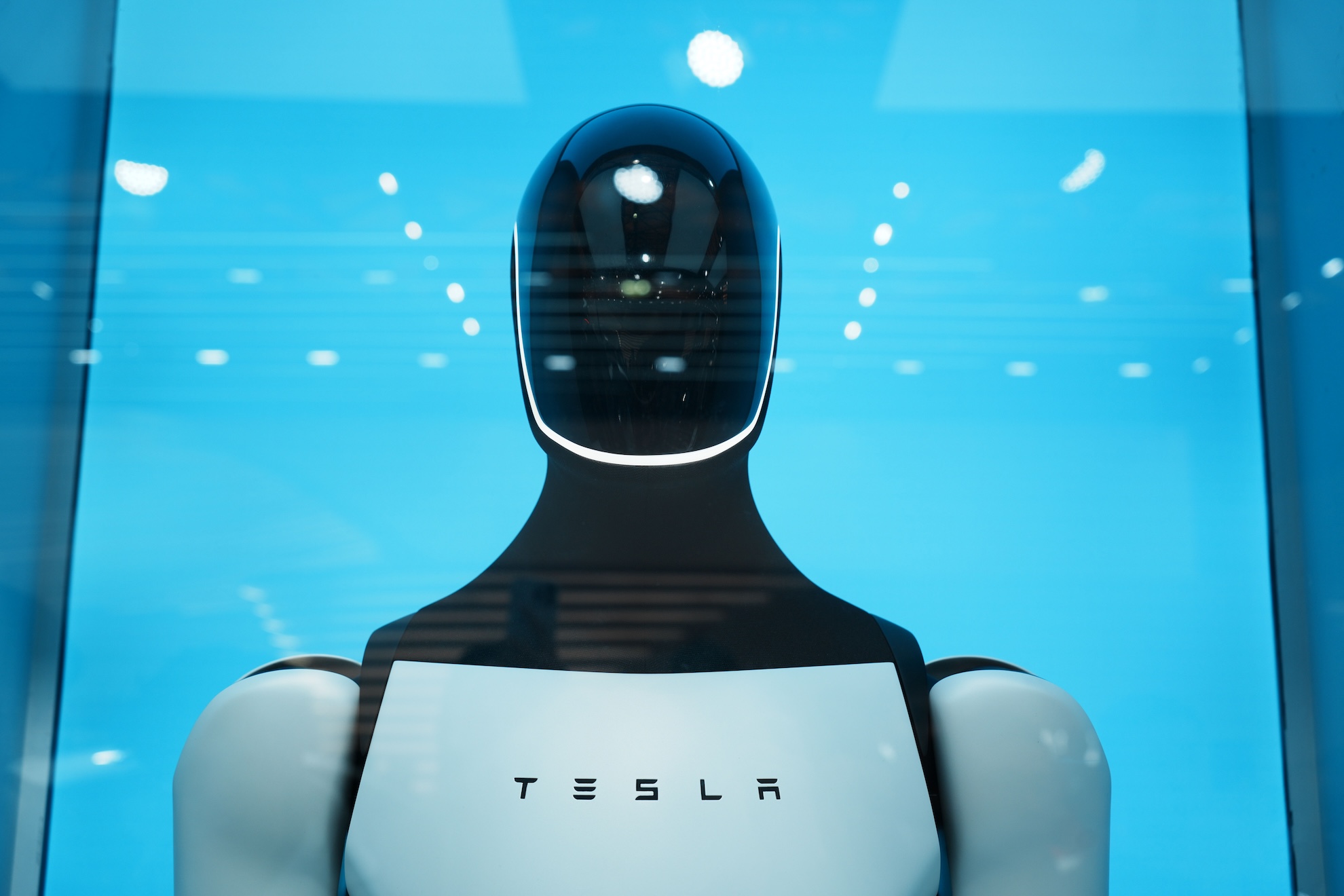
Tesla’s Fremont, California factory is expected to absorb some of the capital as the company winds down production of the Model S and Model X and ramps up manufacturing of its Optimus humanoid robot at scale.
The company said it has cleared ground outside its Austin factory for a dedicated Optimus manufacturing facility. Tesla plans to increase internal production of Optimus for testing and then “probably” make the robot “useful outside of Tesla sometime next year,” Musk said.
Additional funds will go toward strengthening Tesla’s supply chain “across the board,” covering batteries, energy systems, and AI silicon.
How Tesla Compares to Big Tech
Musk noted that Tesla is not alone in sharply increasing capital expenditures. Amazon has projected $200 billion in capital expenditures in 2026 across AI, chips, robotics, and low Earth orbit satellites. Google is slated to spend between $175 billion and $185 billion in 2026, up from $91.4 billion the previous year.
Impact on Free Cash Flow
The aggressive spending plan will weigh on Tesla’s financials in the near term. CFO Vaibhav Taneja said the elevated investment cycle will last a couple of years and result in negative free cash flow for the remainder of this year.
The company had reported an unexpected $1.4 billion in free cash flow in the first quarter, which briefly pushed shares up 4%. However, shares erased those gains in after-hours trading as executives detailed the expanded spending plans.
As of the end of the first quarter, Tesla reported $44.7 billion in cash, cash equivalents, and short-term investments.
“While this may seem like a lot, and we will have the impact of negative free cash flow for the rest of the year, we believe this is the right strategy to position the company for the next era,” Taneja said.