Google now lets you direct avatars through prompts in its Vids app
Google has added new features to its Vids video editor, including the ability to direct and customize avatars using text prompts. The update also brings Veo 3.1 support, YouTube export, and a new Chrome screen-recording extension.

Google on Thursday added new features to its video editor app Vids, including directing and customizing avatars through text prompts, Veo 3.1 support, the ability to export videos to YouTube, and recording with a Chrome extension.
Directing avatars with natural language prompts
Users can now use natural language prompts to direct avatars to “act” in a scene. This can include the avatar interacting with a product, a prop, or a piece of equipment. Google said that despite the dynamic nature of the output, Vids maintains character consistency.
Based on the theme of the video, users can customize characters by tweaking appearance, changing apparel, and creating new backgrounds through prompts.
Veo 3.1 and music generation support
Last month, Google added its Lyria 3 and Lyria 3 Pro music creation models to Vids, allowing users to add sound effects or music to their clips.
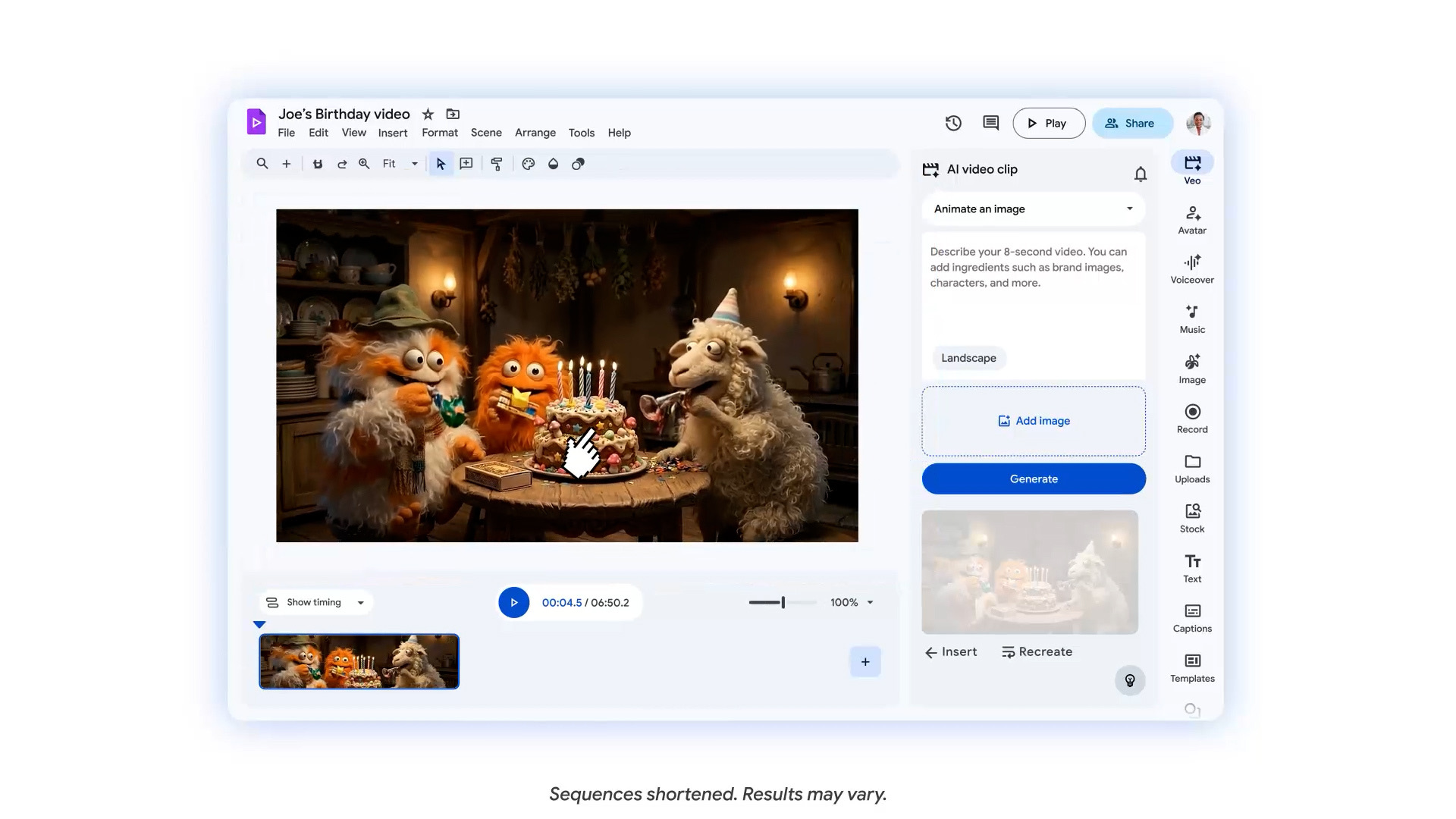
With this rollout, Google is bringing the Veo 3.1 video-generation model to Vids. Veo 3.1 can create eight-second clips directly within the video editing tool. The company is offering 10 free generations per month to all users. Google AI Ultra and Workspace AI Ultra accounts can generate up to 1,000 Veo videos per month.
Direct YouTube export and screen recording
Google is also adding the ability to export finished videos directly to YouTube, eliminating the need to download and manually upload them. Exported videos are set to private by default, allowing users to review them before making them public.
The company is introducing a new screen-recording Chrome extension as well, enabling users to capture their screen with audio or video.
Ongoing expansion and competition
Google has steadily added features to Vids since first unveiling the product in 2024 to cater to enterprise content creation. Last year, the company introduced AI avatars to Vids and expanded access to consumers.
In February, Google added 2D and 3D cartoon-style avatars and expanded language support to seven new voice-over languages: French, German, Italian, Korean, Portuguese, Spanish, and Japanese.
Google Vids faces competition from companies such as Synthesia, HeyGen, D-ID, and Lemon Slice.